
Sustainability in Vacuum Technology: How Refurbished Pumps Conserves Resources While Ensuring Maximum Operational Reliability
Sustainability often begins where existing potential is intelligently leveraged further. Refurbished vacuum pumps from Druschke Vakuum combine resource efficiency with the highest level of operational reliability. Through reconditioning in accordance with original manufacturer specifications, high-performance alternatives to new equipment are created, delivering both ecological and economic advantages.
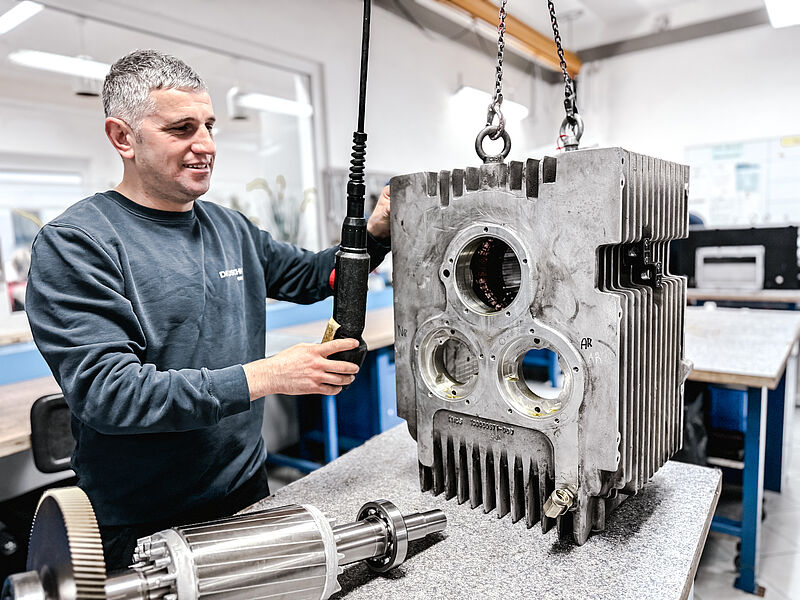
Depending on the pump type, vacuum pumps typically have service lifecycles of several thousand operating hours. In industrial environments, they are continuously exposed to mechanical, thermal, and material-related stress. Despite visible wear on the exterior, the underlying mechanical structure of many models often remains fully functional over long periods.
From the perspective of sustainability research and life cycle assessment (LCA), extending the use phase of technical systems is considered one of the most effective measures for reducing environmental impact. Replacing a fully functional device with a new one unnecessarily increases resource consumption and energy demand.
This is precisely where the concept of refurbished vacuum pumps comes into play: A vacuum pump may have been in operation in a production environment for several years. While it shows visible signs of daily use externally, its core technical integrity remains intact. At this point, a decision is made that goes far beyond simple repair. It is a choice between disposal and responsibility. With refurbished devices from Druschke Vakuum, this decision becomes a deliberate and sustainable process.
The Hidden Environmental Lever in Industry
The production of vacuum pumps requires, depending on the design, steel, aluminum, copper, seals, electronic assemblies, and operating fluids. Manufacturing these materials is energy-intensive. Raw material extraction, transportation, and production processes all contribute to a significant environmental footprint.
The continued use of existing pump housings, rotors, motors, and functional assemblies substantially reduces this demand. During remanufacturing, the following is avoided:
- Primary raw materials (metals and components)
- Portions of thermal and mechanical manufacturing processes
- A significant share of global transport activities
The systematic reuse of such assemblies aligns with the principles of the circular economy, which aim to keep materials in technical cycles for as long as possible.
Remanufacturing to Original Manufacturer Specifications as a Quality Commitment
Sustainability alone is not sufficient in an industrial context. It must be combined with uncompromising operational reliability. For this reason, our remanufactured equipment is fully reconditioned in accordance with original manufacturer specifications:
- Complete decontamination
- Inspection of all safety-critical and function-relevant components
- Repair of assemblies outside of manufacturer tolerances
- Replacement of all wear parts (e.g., bearings, seals, filters)
- Complete surface refurbishment including recoating
- Final electrical safety testing
The result is not an improvised interim solution, but a fully capable production asset. For users, this means receiving a vacuum pump that meets the same functional requirements as a new unit while significantly reducing resource consumption.
12-Month Warranty as an Expression of Trust and Reliability
Another key factor is planning security. Each of our remanufactured vacuum pumps is delivered with standardized inspection protocols, defined quality parameters, and a 12-month warranty.
This warranty represents more than a formal assurance. It reflects the ambition to establish sustainability not as a compromise, but as an equivalent alternative to new equipment procurement. Companies can base their investment decisions on a reliable foundation while simultaneously improving their environmental performance.
Against the backdrop of increasing regulatory requirements and ESG reporting obligations, this aspect is gaining strategic relevance.
Reduction of Indirect Emissions (Scope 3)
Companies subject to reporting under the EU CSRD or the GHG Protocol are increasingly required to account for Scope 3 emissions, which include emissions from upstream and downstream activities. Replacing a functional device with a new one generates additional emissions that are captured in these categories.
Extending the operational lifespan of a vacuum pump through remanufacturing leads to:
- Reduction of upstream production and material-related emissions
- Lower transportation emissions
- Decreased indirect waste volumes and associated disposal burdens
This makes remanufacturing particularly relevant for companies pursuing low-emission procurement strategies, reporting sustainability metrics, or actively managing their carbon footprint.
A Shift in Perspective with Long-Term Impact
Sustainability in industry rarely emerges from isolated, high-profile innovations. It is typically the result of consistently leveraging existing technical potential.
Remanufactured equipment exemplifies this approach. It demonstrates that technological performance, economic rationality, and environmental responsibility are not conflicting objectives, but mutually reinforcing principles.
For organizations seeking to combine ecological responsibility with economic efficiency, this represents a scientifically grounded and technically viable option.
Quellenübersicht
- European Commission, Circular Economy Action Plan, https://environment.ec.europa.eu
- Fraunhofer-Institut für Umwelt, Sicherheits- und Energietechnik UMSICHT, Studie zur Ressourceneffizienz durch Remanufacturing, https://www.umsicht.fraunhofer.de
- VDMA Verband Deutscher Maschinen und Anlagenbau, Nachhaltigkeit im Maschinenbau, https://www.vdma.org